by Ron Hjertstedt | Jan 13, 2022 | News Flash!, Student Corner
Finally, More Females than Males in India
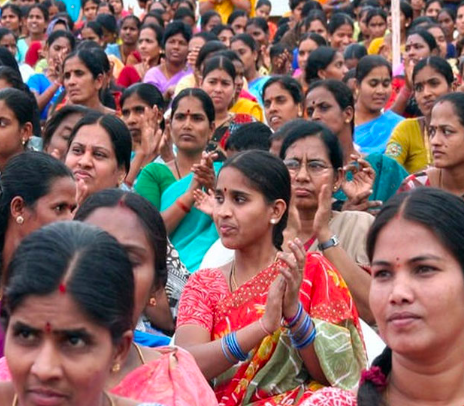
A recent census shows that there are remarkably more females than males in India for the first time in over one thousand years!
One of the most important structural aspects of a society is the relative number of males and females who compose it. According to the Fisher’s Principle, gender ratio is defined as the proportion of females relative to one thousand males in a population. In India, we are now seeing, for the first time since the onset of modern record-keeping, the gender ratio as tipped in favor of females. Now, for the first time since the Vedic Period, over 1,000 years ago, for every 1,000 males, there are 1,020 females according to the National Family Health Survey-5.
During the Vedic Period in India (1,500 BCE – 50 BCE), women enjoyed absolute economic and societal status, and equality and freedom (although it wasn’t perfect as a boy-child was still preferred over a girl-child). The Vedic Period is known as the “Golden Age” for women in India. That era was characterized by the absence of the purdah system (the practice of keeping men and women separate), no discrimination for educational opportunities between the genders, equal rights in selection of partners, polygamy being rare, and widows being able to marry again.
In the post-Vedic period, the status of women fell: women suffered many setbacks when various restrictions were put on women’s rights and privileges. It became increasingly untenable to birth a girl-child instead of a boy-child. Education, which had been an accepted norm for women, was neglected, and later on, girls were totally denied access to education. The Medieval Period was the darkest era in the history of India for women. The status of women in society further deteriorated when child marriage, a ban on re-marriage for widows, the purdah system, polygamy, Jauhar, and sati Pratha (throwing women onto her her husband’s funeral pyre) became a regular part of cultural life.
A gender ratio which is not in favor of women is a dangerous sign for any society because it indicates a high female fetal mortality rate, selective abortions, and excess female deaths. India is a patriarchal society where there is active gender selection by parents, which means that many girls are killed before they are even born. Parents expect sons, not daughters, to provide financial and emotional care, especially in their old age: Sons add to family wealth and property while daughters drain it through dowries; sons continue the family lineage while daughters are married away to another household. People often have a belief that a girl is a liability while a boy is an asset. Misuse of advanced parental diagnostic techniques (sonograms) has led to gender selection with the widespread termination of female fetuses which contributes to a rapidly declining girl-to-boy ratio.
In recent years, India has enacted several government initiatives (see addendum below) to address these important issues in order to begin the process of creating a more optimistic future for females in India from birth throughout all of life by protecting them more holistically and fully.
The status of women improved during the wave of feminism in India in the last few decades. The Feminist Movement (also known as the Women’s Liberation Movement) refers to a series of political campaigns that aim to define and establish the political, economic, personal, and social equality between the sexes. The focus was on institutional reforms which resulted in reduced gender discrimination, giving women access to male-dominated spaces, and promoting equality. However, despite all of that, evils such as domestic violence, female infanticide, sexual abuse, and abortions for gender selection still exist in our society and must be addressed openly with meaningful reforms taking place.
Despite the continued issues of gender inequality, good news is indeed good news, and we should discuss it and celebrate it. The ratio of females to males in India has indeed equalized for the first time in over a thousand years. Our country is finally beginning to appreciate the deep value that females bring to the table to make India a world leader. The importance of protecting the equal rights, safety, and health and welfare for females of all ages is a foundational aspect upon which we can build a modern culture and be a world leader.
This turn of events is largely due to the increasing life-expectancy of females as well as the changes that have been made in the public consciousness as well as the various government initiatives. Although safe spaces for open conversations are happening on an increasing basis, we still need to make constant assurances that we will acknowledge the dignity of women. Laws that protect women are on the books, but they need to be enforced, and perhaps we need even more laws to ensure that the life of all females is protected and safe from inequality, discrimination, child marriage, abortion, violence, rape, beatings, verbal abuse, mutilation, torture, “honor” killings, and trafficking.
Gender equality must be discussed, encouraged openly, and protected in our country in order for us to become the world leader that India is capable of.
Thus, it is imperative to put even more focus on improving the existing policies, laws, and programs to ensure the survival and utter respect for all females in Indian society. We must continue to protect females from harm and disrespect. We must build upon these ideas and not slide backwards once again.
“Yatıra nariyasthu pulyathe remanthe ththra devethha”: The meaning of this Sanskrit sloka is “Where women are respected, there angels will reside”.
* Government Initiatives
- Beti Bachao Beti Padhao (BBBP) aims to generate awareness and ensure protection, survival, and education for the girl-child.
- Working Women Hostel (WWH) promotes the availability of reliable accommodation and ensures the safety and security for women.
- Balika Samridhi Yojana (BSY) focuses on helping girls and motivating them to take up income-generating activities for their own welfare.
- Sukanya Samridhi Yojana focuses on securing a dazzling future for the females.
- Women’s Helpline Scheme focuses on providing 24-hour emergency response to women affected by violence.
Thank you for reading our blog!
The Satya Niketan Higher Secondary School Student Leadership Website Editorial Team
by Ron Hjertstedt | Jan 12, 2022 | News Flash!, Student Corner
Swami Vivekanand: A Hero of Humanity
(by Sanjana Agrawal)
Swami Vivekanand’s birth as Narendranath Dutta was an Indian monk, reformer, philosopher, and one of the most celebrated spiritual leaders of India. He was an inspiring personality and is well known both in India and America since the last decade of the nineteenth century. He is an example of a person who despite having a short life, lived it to the fullest. He taught unconditional love, how to be a better person, and reinforced the importance of giving back to society.
Narendranath Dutt was born into an affluent Bengali family on January 12,1863 in Calcutta (now known as Kolkata), in West Bengal. His parents were Vishwanath Dutt and Bhuvaneshwari Deri. His father was a successful attorney and his mother was a strong, endowed, woman with a God-fearing mind who had a great impact on her son.
He went to Calcutta Metropolitan School for his early education and later enrolled the Presidency College of Calcutta. IN 1880, he joined Keshab-Chandra Sen’s Nava Vidhan and also became a member of Sadharan Brahma Samaj led by Keshab Chandra Sen and Debendranath Tagore. In 1881, he passed the fine arts examinations and completed a Bachelor of Arts degree in 1884. he was a sharp, intellectual student and was interested in music as well as excelling in studies. He also scrutinized Hindu scriptures — the Upnishads on one hand while on the other hand he studied western philosophy and spirituality.
As he grew up, his knowledge led him to questions about the existence of God. Investigating this, he met many monks but none of them could provide answers to his deep questions. As he met Ramakrishna Paramhansa at Dakshineshwar kali temple he asked him the same question: ” Have you seen the God? ” He was given a simple answer, ” Yes,I have seen. I have seen God as clearly as I see you, only in a much deeper sense. ” This inspired Vivekanand to continue meeting him.
In 1884, when his father died, there were many financial crises in his family and that was the turning point in his life as he accepted Ramakrishna Paramhans as his life-mentor. One year later, In 1885, Ramakrishna suffered from throat cancer and was transferred to Calcutta. His disciples took care of him. Ramakrishna gave up his life on 16 August, 1886. After this incident they all started to live together and they performed math, Yoga and meditation. But, after some time he left this and decided to tour around the world to know about several societies and cultures, and also understand and practice what is common in their daily life. Vivekanand carried out his “free-thinking” philosophy into a new paradigm. He went off to Chicago USA to attend the meeting of the World Parliament Organization.
On 11 September 1893, in Chicago, Swami Vivekanand gave an outstanding speech full of wisdom. He started his speech by addressing the audience as “brothers and sisters of America”. in his speech, he described the principles of Vedanta. This led to a huge silence amongst the crowd, and at the end he received a standing ovation.
When he returned to India in 1897, he founded Ramakrishna Mission in Belur Math, Calcutta. The main vision of the mission was to love life, focus on the significance of the individual — his presence and abilities. A school, college, and hospital was established under this. In the mission, his teaching was purposely based on the Vedanta and spiritual teaching of Ramakrishna.
On the evening of 4 July, 1902, he died at the age of 39 while performing mediation at Belur Math, Calcutta. He attained Mahasamadhi, and was cremated on the banks of the river Ganga.
Here are some additional stories and facts about Swami Vivekanand:
- He was a very naughty and angry boy during his childhood. His mother poured cold water on him and said “Om Namah Shivay” to make him calm down.
- When his father died, his family faced financial hardship. He went to Ramakrishnappa to ask for help, but was refused because he was too to pray for himself, not for wealth, but for a deeper conscience and reclusion. That was a turning point for him.
- Once when Swamiji went to America, a woman expressed her desire to marry him because she wanted a son like him. So he answered her by saying that he was a monk which prevented him from marrying, but she can always think of him as her son.
- His birthday, 12 January, is also celebrated on National Youth Day starting in 1984 out of respect and acknowledgement of his philosophy and ideas for which he lived and worked.
This essay was written by Sanjana Agrawal (who also celebrates her birthday today ;^). Thank you Sanjana for sharing your article with us.
by Ron Hjertstedt | Nov 23, 2021 | Our Blog, Student Corner
Impact of COVID-19 on Our Education
The COVID-19 pandemic, caused by the novel coronavirus SARS-Cov-2 has changed the course of our life. In this article, we will present our opinion that the lockdowns indeed had a few ancillary family, environmental, and familial benefits, but the negative effects outweighed the positives and that a more careful approach should have been considered before the widespread disruption to the lives of the youth.
In order to reduce the spread of the virus, the government has taken various precautionary measures including a nationwide lockdown.
A big concern of the pandemic and resulting lockdowns was how to continue educating India’s students effectively while schools were mandatorily closed. There were several sets of guidelines and plans issued by the government. Due to school closures, there was a need to adopt a change in our educational system. Online learning was put into place, and the mantra was that education would continue at a distance, via technology, and that all would be good and the education of students wouldn’t miss a beat.
Educational institutions made various efforts to reach students through various electronic, impersonal means which were readily available to wealthier families across the nation. However, the poorest, and even many middle-class were hurt the most as they just didn’t have the resources to attend the online classes because they couldn’t obtain, or use effectively, the gadgets and technology required for online classes.
Many students fell through the cracks.
Initially, students were really happy because of the the lockdown, and especially of school closures. They were spending their whole day playing games and watching movies. Naturally though, after a while the students became bored with this unusual twist in their daily routines, and they realized that their old pre-pandemic routine of coming to in-person school was much better than this new lax and electronic lifestyle. Students were waiting for the lockdowns to end so that they could become free again from the isolation and able to meet with their friends and attend in-person classes.
Every coin has two sides, and similarly, the lockdown also had both positive and negative effects. On the one hand, students had extra time to prepare for competitive exams and self-study. They also had more quality time with family and learning to concoct new activities at home. However, on the other hand, the closure of physical schools forced students to do online learning, which had many detrimental effects in areas such as academic performance, straining of eyesight from increased screen-time, mental health issues such as depression, stress, anxiety, and frustration from human alienation.
After facing this hazardous pandemic, we realize that the offline mode of study is more beneficial and productive as compared to the virtual mode of study. Offline classes provides for direct interaction between teachers and students, hence it provides a healthier environment for the student to flourish. Therefore, in our conclusion, despite the few blessings that came our way via the lockdown, overall, the lockdowns and school closures were much more harmful than beneficial. The lockdowns gave us a better appreciation for our physical learning environment and interpersonal interactions, and we will hopefully not take it for granted now that we’ve seen the negative impact we’ve experienced without it.
Thank you for reading our opinion.
The Student Website Editorial Team
*Disclaimer: This is the sole opinion of the Student Editorial Team and does not necessarily represent the views of our school or teachers.